Li Ao on 1989 Tiananmen Square Protests (2008)
What should the government do when there is a large scale riot and the political situation is not stable? On one hand, you can run tanks, and the result in bad press. On the other, you risk political turmoil and civil war.
Just saw Li Ao's TV show, on youtube, discussing the Tiananmen Square protests of 1989:
https://youtu.be/8atoyCLTrRE- «李敖谈 “6.4天安门事件” 上» (Li Ao on Tiananmen Square protests of 1989, part 1 of 2)
Mentioned 钱其琛
https://youtu.be/xog-zxf5nGA- «李敖谈 “6.4天安门事件” 下» (Li Ao on Tiananmen Square protests of 1989, part 2 of 2)
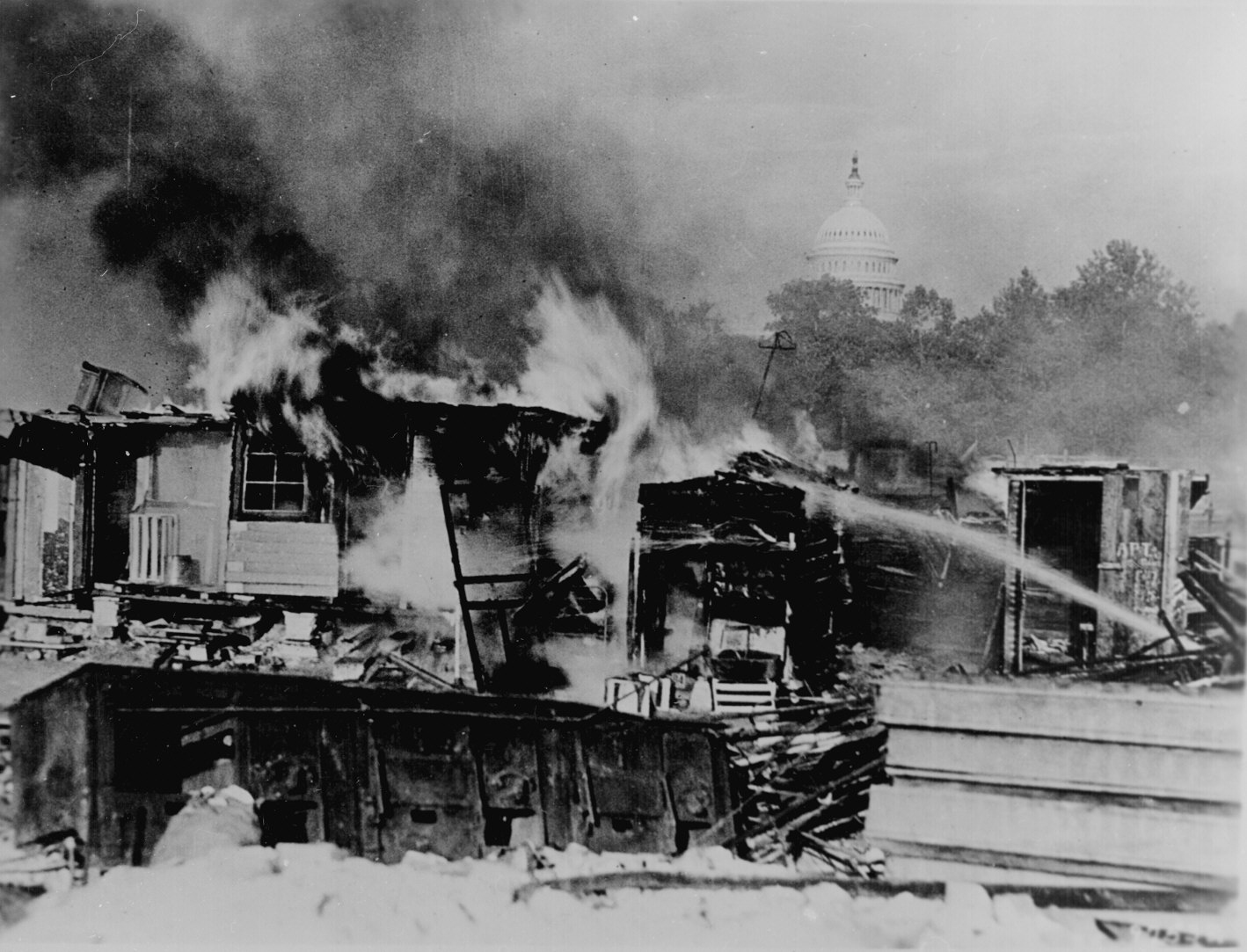
I think Li Ao is a bit zealous here. In summary, he's saying that foreign media painted the picture of Chinese “human rights” abuse, and cited 3 examples of how USA, in different incidents, also used military to disperse crowd, including setting fire on veteran protester's camp in 1932, killing anti-war protest students of Kent State University in 1970, and in a anti-US protest in Baghdad, 2 people are ran over by US tanks.
Bonus Army Conflict
The first incident cited is interesting. I looked up, it is:
New York Times, July 29, 1932, (has bold headline Troops Drive Veterans from Capital; Fire Camps There and at Anacostia; 1 Killed, Scores Hurt in Day of Strife)
Wikipedia article for 1932 has this entry:
July 28 - U.S. President Herbert Hoover orders the U.S. Army to forcibly evict the Bonus Army of World War I veterans gathered in Washington, D.C. Troops disperse the last of the Bonus Army the next day.
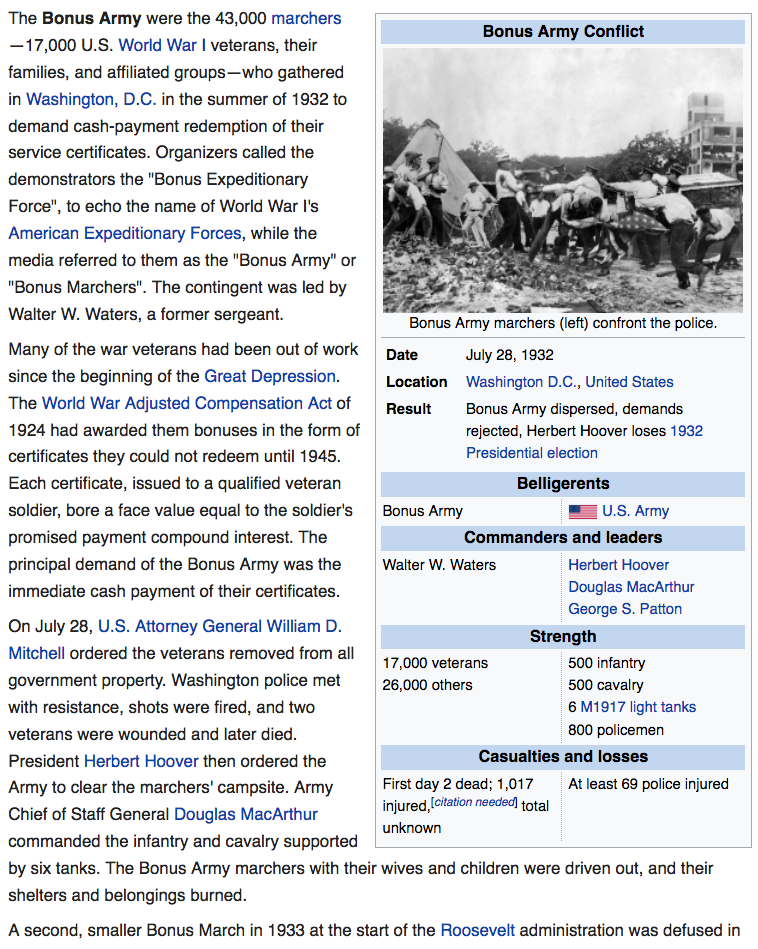
Quote from Wikipedia Bonus Army, as of :
The Bonus Army was the popular name of an assemblage of some 43,000 marchers — 17,000 World War I veterans, their families, and affiliated groups — who gathered in Washington, D.C., in the spring and summer of 1932 to demand immediate cash-payment redemption of their service certificates. Its organizers called it the Bonus Expeditionary Force to echo the name of World War I's American Expeditionary Force, while the media called it the Bonus March. It was led by Walter W. Waters, a former Army sergeant.
… President Herbert Hoover then ordered the army to clear the veterans' campsite. Army Chief of Staff General Douglas MacArthur commanded the infantry and cavalry supported by six tanks. The Bonus Army marchers with their wives and children were driven out, and their shelters and belongings burned.
The number of deaths is about 4, injured about 1k.
Kent State University Killings
The Kent state university incident, of anti-war protest, with 4 deaths in campus, is cited from: Events That Shaped Century , a photo book published by Time-Life Books. Buy at amazon. That photo is very famous at the time.
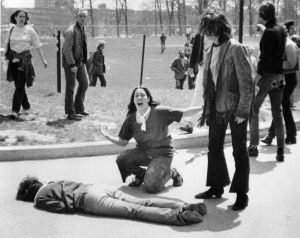
Quote from Wikipedia Kent State killings:
The Kent State shootings – also known as the May 4 massacre or Kent State massacre – [2][3][4] occurred at Kent State University in the city of Kent, Ohio, and involved the shooting of unarmed college students by members of the Ohio National Guard on Monday, May 4, 1970. The guardsmen fired 67 rounds over a period of 13 seconds, killing four students and wounding nine others, one of whom suffered permanent paralysis.[5]